
“If I could turn you on, if I could drive you out of your wretched mind, if I could tell you, I would let you know.”
~R.D. Laing The Politics of Experience and The Bird of Paradise.
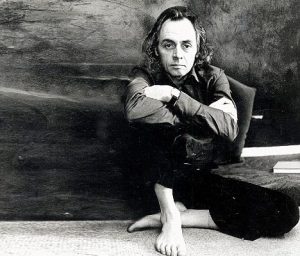
Ronald David Laing (7 October 1927 – 23 August 1989) was a major voice of the 1960s counterculture, existential psychiatry, and the anti-psychiatry movement. Laing and his contemporaries focused on human freedom, personal responsibility, and the individual’s search for meaning. Madness was viewed as a reaction to an insane world, a night sea voyage of the soul that could ultimately free a person from the straitjackets of society. Unlike other psychiatric practices, existential psychiatry was less inclined toward diagnosis, medication, or curing symptoms.
During the 1950s, while working at Gartnavel Hospital, Glasgow, Laing conducted a groundbreaking and controversial clinical trial known as the “Rumpus Room” experiment. This project which focused on a small group of women who had been diagnosed with schizophrenia was the blueprint for his career. Deeply discouraged by the conditions of the wards and the treatment of the women from medical staff, Laing moved the women out of the wards and into a comfortable space stocked with arts and crafts materials. The assigned nurses wore ordinary clothes and were encouraged to treat the women as equals. Medication was greatly reduced and instead, positive social interaction, respect, dignity and equality were the mainstay treatment. The results were staggering; within 18 months all 12 women were deemed fit and discharged. Within 12 months all 12 women relapsed. To the sceptics, this was confirmation that schizophrenia was a lifelong disease without cure; for Laing it was proof that the environment into which the women were returned was exactly the toxic conditions that had caused their madness in the first place. According to Laing, the experiment had not failed, society had.
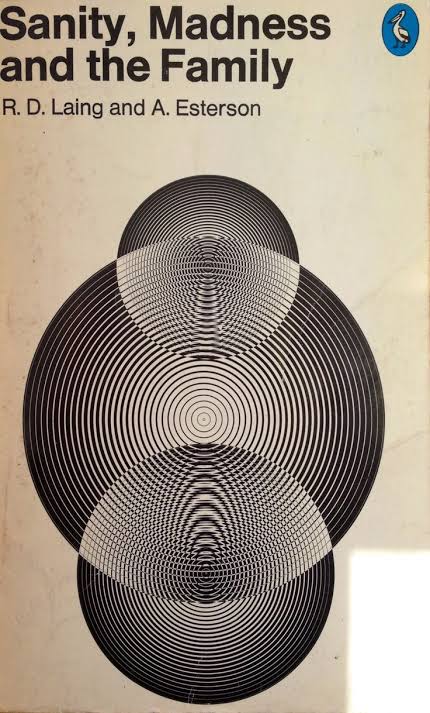
After this, Laing’s focus shifted from the individual patient’s brain and looked toward their domestic social networks. In the Tavistock clinic in 1956, Laing partnered with Aaron Esterson to study the domestic lives and environment of 11 UK families with schizophrenic daughters. This research culminated in his 1964 book, Sanity, Madness and the Family. Here he argued that “madness” of young women was often a logical, defensive response to gaslighting, and contradictory demands from their parents.
While Laing’s later work expanded to critique the entire socio-political structure, institutional violence, and double binds of the wider culture, I feel there is scope to continue with Laing’s enquiry into the social causes of madness. In my own work I am particularly interested in how society, culture and environment have affected and continue to affect the feminine. Laing moved away from his radical theories of sociology and toward mysticism and shamanism, provoking further rejection from the mainstream medical community. In 1987 he was forced to resign from the medical register following allegations of unprofessional conduct. This ended his ability to practice or to conduct medical research.
It was Laing’s radical work with the schizophrenic women of Glasgow that first piqued my interest. My own grandmother, a working- class widow in the 1950s, raising a child (my mother) in poverty, with a heavy burden of inherited trauma (her own mother had died giving birth to her), was diagnosed with schizophrenia. From a young age (about 11), I felt a strong pull and a deep calling to investigate my grandmother’s life, the conditions of her life, and the culture in which she was living. This has profoundly shaped me and influenced my work. I am still on this journey today.
Discovering Laing was a milestone.
Politically, Laing was regarded as a thinker of the “New Left”, his core philosophy focused on how modern institutions strip individual authenticity and human experience in the name of social conformity.
I doubt Laing would be favourable to the contemporary left today with its “progressivism”, “woke” ideology, hyper focus on identity and language policing. While woke ideals appear to encourage people to define themselves by specific demographics, Laing would likely see this as a trap that prevents people from transcending societal straitjackets.
Woke culture, it would seem, encourages people to adopt their trauma and mental health diagnosis as core pillars of their identity. Laing would probably see this as impinging upon, if not completely aborting, the transpersonal or shamanic voyage. By turning a spiritual crisis into an institutionalized social identity, the individual is prevented from swimming through the ocean of experience and emerging renewed and transformed.
Laing would probably view woke culture as a symptom of a spiritually starved society. He would advocate for less labels not more.
Why Laing is an Anaretic Man:
The 29th or anaretic degree is considered the critical degree in Astrology. It occurs when a degree is stationed between 29 ”00”00 and 29”59”59 degrees. It is often referred to as the degree of fate as the house themes the natives navigate in this lifetime tend to centre on finales, endings, decisions, and culminations. It is a pressure point that demands completion before the next evolutionary steps can be taken.
The word “anaretic” comes from the ancient Greek word anairetes, meaning “the destroyer”. Modern astrology applied it to the 29th degree because it is the literal “death” or destruction of a planet’s time in that specific zodiac sign before it transitions into the next
The position of Laing’s astrological natal moon is 29° Aquarius – the same degree of the collective north node in the full moon partial lunar eclipse chart. In his case, the moon sits in the 12th house, in the subconscious, the unseen, deeply intuitive, and sensitive to collective undercurrents.
Laing tells us that to break the trauma loop, we must first become aware of the system we are trapped in. In his writings, he echoed the sentiment that you cannot behold your karma until you acknowledge your own aggression and the reality of your environment.
Sabian Symbol for 29° Aquarius, the lunar eclipse north node:
PHASE 330 (AQUARIUS 30°): DEEPLY BOOTED IN THE PAST OF A VERY ANCIENT CULTURE, A SPIRITUAL BROTHERHOOD IN WHICH MANY INDIVIDUAL MINDS ARE MERGED INTO THE GLOWING LIGHT OF A UNANIMOUS CONSCIOUSNESS IS REVEALED TO ONE WHO HAS EMERGED SUCCESSFULLY FROM HIS METAMORPHOSIS.
KEYNOTE: The ability for the person with an open mind and a deep feeling for self-transcendence to come in contact with higher forms of existence.
That the full moon on August 28th was a lunar eclipse, indicates the possibility for bringing the light of consciousness into the inner working of our subconscious mind and our habituated patterns and conditioning… much of which was shaped by our biological family and beyond that society and culture.
Perhaps Laing can be considered as one who “successfully emerged from his metamorphosis”, even though he may not have entirely crossed the stormy night sea voyage to become an entirely true self. Laing’s own account of his childhood told of an unstable mother, and a physically abusive father. And while Laing devoted his life’s work to trying to understand the social and familial traps that bind, the legacy of inherited trauma continued through to his own children and his eventual estrangement from them.
Laing’s concept of the “self “differed from Jung’s in that healing was not about connecting with a cosmic, capital S archetype, it was about tearing down the defensive veil of the false self so that the hidden, fractured being could step back into physical reality and exist authentically among other people.
While Laing argued that the idealized nuclear family could be claustrophobic and psychologically violent, he would likely despise the clinical therapy speak and pop- psychology buzzwords of today. He might view labelling parents’ toxic or narcissistic as another form of splitting and projection, reducing the painful and complex human relationships into sterile categories. Furthermore, he might view the mystification of internet psychology as nothing more than a replacement of the mystification of the family.
Continuing with the 29th Degree in Laing’s Chart:
Laing’s ascendant/descendant axis is also on the 29th degree, Pisces and Virgo respectively. Remarkably his MC is at 29 ° Sagittarius, while his IC is at 29 ° Gemini. With all his angles and his moon at 29 °, he truly was an “anaretic man”, intent on destroying the oppressive structural violence of society and guiding lost souls to liberation.
Having all four natal angles (Ascendant, Descendant, Midheaven, Imum Coeli) and the Moon at the 29th degree, means Laing’s entire public, private, relational, and emotional life is stamped with the intense, urgent energy of the anaretic degree. It symbolizes final lessons, total saturation of a sign’s traits, and a profound sense of graduation or karmic wrap-up. It implies an old soul and one who has lived through the archetypal arc of that journey… in Laing’s case Aquarius, Pisces, Virgo, Sagittarius and Gemini… the full elemental spectrum.
With his moon in the 12th house Laing also had something of the lonely visionary about him, susceptible to taking on “world pain”. He was profoundly rejected not only by mainstream medicine but also elements of his own anti-psychiatry movement.
Laing’s capacity to plug into the collective matrix for cues on how to heal generational trauma formed the keystone of his work; he looked deeply into societal factors that caused that trauma. Laing’s entire career evolved from analysing internal family dynamics to launching a full-scale critique of Western civilization, capitalism, and modern institutional programming. He argued that the sick family is not an accident; it is a highly efficient micro-factory designed by society to manufacture compliant, alienated citizens. He argued that what society calls sanity or normality is a profound state of psychological numbness.
How Laing Ties in with the Last Eclipse Season:
Many of us, me included, experienced the last eclipse season as a massive unravelling and release of karmic burdens and “knots”, specifically related to inherited trauma and the societal and cultural institutions that created them. Laing would no doubt have been lit up by this shift in consciousness.
For personal reasons and in the pulse of the collective, I am sensing the ghost of R.D. Laing beckons us onward toward liberation.


